

Top 5 Cities in Italy: An Editorial Guide for First-Time and Return Travelers
Five cities, five distinct ways into Italy through culture, food, and history.
italyguided_tour
A calm, evocative introduction to Rome for first-time visitors, where ancient stone, church bells, espresso bars, and evening passeggiate share the same streets.

Rome is best approached not as a checklist, but as a city of layers: empire beneath your feet, faith rising in domes and bell towers, and everyday Roman life unfolding over coffee, market errands, and long dinners. First-time visitors often feel pressure to "do" Rome efficiently, yet the city rewards a slower gaze. A ruined forum, a baroque fountain, and a neighborhood trattoria can all belong to the same afternoon.
That means setting your expectations well. You will walk a great deal, often over cobblestones, and distances that look short on a map can feel longer in the heat. Build in pauses: an espresso at the counter, a shady piazza, an unplanned detour down a side street. Rome is one of Europe’s most visited cities, drawn by an extraordinary concentration of archaeological sites, churches, museums, and monuments, so major sights can require planning ahead, especially the
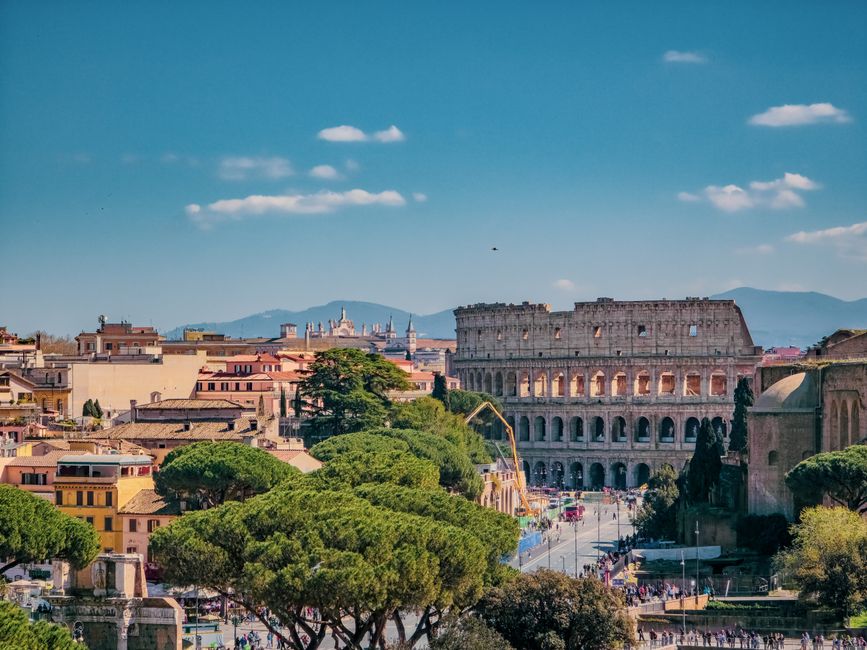
Start in the ancient core, where the scale of the Colosseum and Roman Forum
The first relief in Rome often arrives after the first wrong turn: you realize the city is not resisting you, only asking for a slower rhythm. That is the common thread running through first-timer advice across travel creators and practical guides. One widely shared tip is not to stack the day too tightly; an Instagram post focused on first-time Italy mistakes puts it plainly: plan one major sight, then leave room to wander and adjust (Instagram
Rome’s grandeur is real, but its lasting hold often comes from smaller encounters: the cool hush inside an unplanned church, a plate of cacio e pepe that is better than the one you researched, the amber light that settles over stone at day’s end. As a first-time visitor, you should absolutely see the great monuments; Rome is one of Europe’s most visited cities for good reason, with an extraordinary concentration of archaeological sites, churches, fountains, and museums documented even in broad tourism overviews such as Tourism in Rome
Based on: rome • guided_tour
A first impression of Lisbon shaped by light, steep streets, tiled facades, and the broad calm of the Tagus.
The simplest way to read the city is to alternate scale. Give one part of the day to the monumental Rome that first brought you here, then let another part belong to a lived-in district such as Monti or Trastevere, where the rhythm shifts toward shopfronts, aperitivo, and dinner. Save room for Rome’s essential dishes—cacio e pepe, carbonara, amatriciana, and gricia—because meals here are not a break from the city; they are one of the clearest ways of understanding it.
The Vatican side of Rome brings a different kind of grandeur: domes, ceremonial spaces, and a sense of scale that feels designed to steady the gaze upward. Even if faith is not your reason for visiting, this part of the city matters because it reveals how fully religion shaped Rome’s art and urban form. Elsewhere, the pleasure is more intimate. Pause at a café counter for an espresso, linger over a plate of cacio e pepe or carbonara, and treat meals as part of the city’s structure, not a break from it. Rome’s food culture is one of its clearest introductions to local rhythm, from quick morning coffee to long evening dinners centered on Roman staples like cacio e pepe, carbonara, amatriciana, and gricia.
For many first-time visitors, Monti works especially well as a base: close enough to major sights to keep days walkable, yet still human in scale, with small streets, cafés, and a softer pace noted in recent traveler recommendations on Facebook. It is one of the few areas where you can sightsee hard in the morning and still feel you have a neighborhood to come back to.
The best balance of weather and crowds usually comes in April to May or September to October, when walking is pleasant and the city feels more open. High summer can be beautiful, but heat and August slowdowns can narrow your best hours, as noted by Designer Journeys. In Rome, the wisest priority is simple: see the great set pieces, then leave room for the pause between them.
The city is dense with scale and detail, and even efficient days expand. A morning at the Colosseum and Forum can easily lead into an unplanned church, a shaded piazza, or an espresso taken standing at the bar. Social travel videos aimed at first-timers keep returning to the same pattern: see the essential monument, then let the historic center loosen the edges of the day (TikTok). That is often when Rome becomes memorable rather than merely completed.
A smoother arrival matters, too. If you land at Fiumicino tired and overstimulated, having a simple airport plan can change the mood of the entire first day; one Facebook travel reel recommends the train into Termini as the least complicated route for many visitors (Facebook). Just as important: reserve the non-negotiables early. Rome’s popularity is not abstract—travel sources routinely note its huge visitor numbers, and major sights reward advance booking rather than hopeful spontaneity (Tourism in Rome).
Most of all, leave margin for the Roman habits that steady the trip: a long lunch when the heat rises, an espresso stop between neighborhoods, a walk after dark when the stone seems to hold the day’s warmth. First-time visitors often think smooth means doing more efficiently. In Rome, it usually means doing slightly less, and noticing more.
What helps most is a little protected looseness in the day. Many first-time travel tips now converge on the same advice: plan one major anchor, then leave space for walking, pausing, and changing your mind. That rhythm suits Rome because it is a city best understood in transition — between piazza and side street, basilica and bar, ruin and laundry line. Social travel advice aimed at newcomers repeatedly returns to the value of wandering rather than over-scheduling, and in Rome that instinct is less romantic than practical: it is how the city becomes legible.
So after the Colosseum, after the Vatican, after the admired view and the photographed fountain, allow for something smaller. Step into a neighborhood church because the door is open. Order a modest lunch — perhaps carbonara, amatriciana, or cacio e pepe, the Roman dishes that remain central to the city’s culinary identity in even basic food-focused travel references like this overview of Rome’s cuisine. Walk until the streets grow quieter. Stay out just long enough to watch dusk soften the facades and make the city feel briefly private.
That, finally, is the gift of a first Rome trip. You do not need to master the city to remember it well. You only need to meet it with enough structure to reach what matters, and enough openness to notice what was never on the itinerary. The essential sights will explain Rome’s scale. The unplanned moments will explain its soul.


